
Harish Rana, the first person in India to be granted passive euthanasia, has died at AIIMS-Delhi after being in a coma for over 13 years. His case led to a landmark Supreme Court judgment allowing passive euthanasia and sparked discussions about the right to die with dignity in India.

Harish Rana, the first person in India to be granted passive euthanasia, has died at AIIMS-Delhi after being in a coma for over 13 years. His case led to a landmark Supreme Court judgment allowing passive euthanasia and sparked discussions about the right to die with dignity in India.
The Supreme Court of India has granted permission for passive euthanasia for a 32-year-old man who has been in a coma for over 12 years, authorising the withdrawal of his artificial life support.
The family of Harish Rana, the first person in India permitted passive euthanasia, bid him farewell at his cremation in Delhi. Rana's organs were donated, and mourners gathered to pay their respects after a 13-year ordeal following a tragic accident.

The family of Harish Rana, India's first passive euthanasia patient, bid him farewell at his cremation in Delhi. Rana's death follows a Supreme Court ruling allowing the withdrawal of life support.
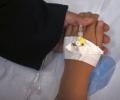
"Human beings have the right to die with dignity." That's what the Supreme Court said on Friday while saying that passive euthanasia is permissible within guidelines. However, what is passive euthanasia? What is a living will? Here's all you need to know on the issue.
The draft bill allows euthanasia for patients who can take informed decisions; doctors to be protected from liability.
In a bid to make the guidelines on "living will" more workable and less cumbersome, the Supreme Court on Tuesday removed the condition that mandated a magistrate's approval for withdrawal or withholding of life support to a terminally ill person.
The bench laid down guidelines as to who would execute the will and how the nod for passive euthanasia would be granted by the medical board.

A five-judge constitution bench headed by Chief Justice Dipak Misra reserved its verdict on a plea seeking recognition of 'living will' made by a terminally-ill patient for passive euthanasia.
The family of Harish Rana, who was granted permission for passive euthanasia by the Supreme Court, immersed his ashes in the Ganga River, marking the end of a 13-year ordeal following a tragic accident.

The Supreme Court of India has allowed passive euthanasia for a 32-year-old man who has been in a permanent vegetative state since 2013, highlighting the legal and ethical considerations surrounding the right to die with dignity.
AIIMS-Delhi has begun implementing the Supreme Court's decision to allow passive euthanasia for Harish Rana, who has been in a coma since 2013. A specialised medical team has been formed to oversee the process, which is expected to take two to three weeks.

The Supreme Court has reserved its judgment on a plea seeking passive euthanasia for a man who has been in a comatose state for over 12 years after suffering a fall in 2013. The court heard arguments regarding the withdrawal of artificial life support and the ethical considerations involved.
The father had approached the Supreme Court in 2024 seeking passive euthanasia for his son. The court had then declined to grant relief.

A 52-year-old government school teacher from Indore, who is suffering from an excruciating bone disorder that has confined her to a wheelchair, has sought President Droupadi Murmu's permission to undergo euthanasia.
'Why can't we work towards a dignified end of the person when a cure is not possible and the end is inevitable?'
After a landmark Supreme Court ruling, the family of Harish Rana, comatose for 12 years, prepares for his passive euthanasia, marking a significant moment in India's end-of-life care debate.
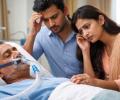
'Families go through turmoil at that time. There is a feeling of guilt and uncertainty, and they do not know what they should be doing.' 'Now that the new judgment has clarified what the procedure is, doctors will be confident enough to talk to the families and explain what is to be done.'

The Supreme Court of India has permitted euthanasia for rabid, incurably ill, or demonstrably dangerous stray dogs to mitigate the threat to human life. The ruling includes several directives to manage the rising stray dog population, emphasising public safety and animal welfare.
The Supreme Court of India has permitted the withdrawal of life-sustaining treatment for a 32-year-old man who has been in a coma for over 13 years following a traumatic brain injury.
Describing the case as a "very hard one", the Supreme Court sought the Centre's response on Tuesday on a plea of a couple whose 30-year-old son has been lying in a vegetative state in a hospital since 2013 after suffering head injuries.

Kerala Catholic Bishop Conference president Archbishop Soosa Paikam said the verdict was "painful" and would have disastrous consequences.

Those talking about euthanasia using Aruna Shanbaug as leverage had better cry out for an actively functioning, effective and affordable healthcare regime. That would be a better service rendered to those who need it, says Mahesh Vijapurkar.

The Supreme Court on Friday said it will await the government's stand in its endeavour to examine a plea to legalise passive euthanasia by means of withdrawal of life support system to terminally-ill patients.

'Passive euthanasia is actually more important in the sense that the need to administer it arises every day in some hospital or the other. And it can be administered without a living will,' Vipul Mudgal, director of the NGO Common Cause -- which had filed a plea to declare 'right to die with dignity' as a Fundamental Right flowing from Article 21 or the Right to Life, -- tells Rediff.com's Swarupa Dutt.

The apex court's 2018 order on passive euthanasia wherein it recognised the right to die with dignity as a fundamental right and an aspect of Article 21 (right to life) notwithstanding, people wanting to get a 'living will' registered have been facing problems due to cumbersome guidelines.

'Aruna Shanbaug's death has again opened up the euthanasia conversation in the public domain. For a health care discourse often dominated by inane news, this is not such a bad thing.'
The Supreme Court on Monday rejected the petition seeking euthanasia for Aruna Shanbaug who has been lying in a vegetative state for over three-and-a-half decades at the KEM hospital in Mumbai.

Aruna Shanbaug, a former nurse who lived in a vegetative state for the past 42 years after being brutally sexually assaulted at the KEM Hospital in Mumbai and became the face of the debate on euthanasia in India, died on Monday.
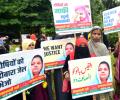
The Supreme Court on Wednesday agreed to constitute a special bench to hear a plea against the remission of sentence of 11 convicts in the Bilkis Bano gangrape case, which also involves the killing of seven members of her family during the 2002 Gujarat riots.
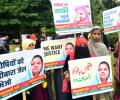
A bench of Chief Justice DY Chandrachud and justices PS Narasimha and JB Pardiwala assured Bano, represented through her lawyer Shobha Gupta, that the new bench will be formed at the earliest.

The hearing on Bilkis Bano's plea challenging the remission of sentence of 11 convicts in the gang-rape case by the Gujarat government, could not be held in the Supreme Court on Tuesday as the judges concerned were hearing a matter related to passive euthanasia as part of a five-judge Constitution bench.
Best tribute to Aruna Shanbaug would be to take some legislative action on ending the mental trauma of those who can't live outside of a hospital again.
'Every adult has the right to ignore the tenets of any and every faith, so long as it does not harm somebody else,' says Devangshu Datta.

While that created a stir so did the decision on his penultimate day at work with the Supreme Court rechristening its summer vacation "partial court working days", an issue that has led to criticism that the apex court judges enjoyed long breaks.

Justice Sanjiv Khanna, who has been part of several landmark Supreme Court judgements such as scrapping the electoral bonds scheme and upholding abrogation of Article 370, will be sworn in as the 51st Chief Justice of India on Monday.

'If someone were to ask you if you want to die tomorrow, no matter what problems you are grappling with, you would be hesitant, right?'

We allowed her to rot daily. We simply did not care. Soon she will be forgotten and the stories of the nurses who cared for her will become Mumbai's urban legend, says Neeta Kolhatkar.

Even as police remains clueless about Aruna Shanbaug's assailant, a local newspaper on Friday claimed to have traced him to a village in Uttar Pradesh.
